
How to Choose the Right Thermal Oil Boiler?

Time:2026-11-07 Author:Charlotte
0%

Choosing the right thermal oil boiler begins with the process, not the catalogue. What temperature must the production line maintain? How quickly does the load change? A coating oven, reactor, and drying line may need different heat-transfer arrangements, even when their temperature targets look similar. The International Energy Agency’s Energy Efficiency 2023 report estimates that industry accounted for about 37% of global final energy consumption in 2022. That figure makes energy performance worth examining, but it does not predict the efficiency of any individual boiler.

A practical selection compares required operating temperature, peak and average heat demand, heat-transfer-fluid properties, burner type, controls, and available installation space. Ask suppliers for performance data at your actual operating conditions, not just a headline efficiency figure. Check how the system handles start-up, low-load operation, fluid circulation, and planned maintenance. Those details show up on the plant floor: a slow warm-up can delay a shift, while awkward access can turn a routine service into lost production time.

The best fit is rarely the largest unit. Nor is the cheapest quote automatically the least expensive choice over its service life. Compare fuel use, maintenance requirements, replacement parts, and support arrangements using consistent assumptions. Industry guidance, including the U.S. Department of Energy’s process-heating resources, encourages a whole-system view rather than judging equipment in isolation. Still, estimates can miss real operating patterns. A careful review of temperature logs and production schedules is a better starting point than guesswork. Small details matter.
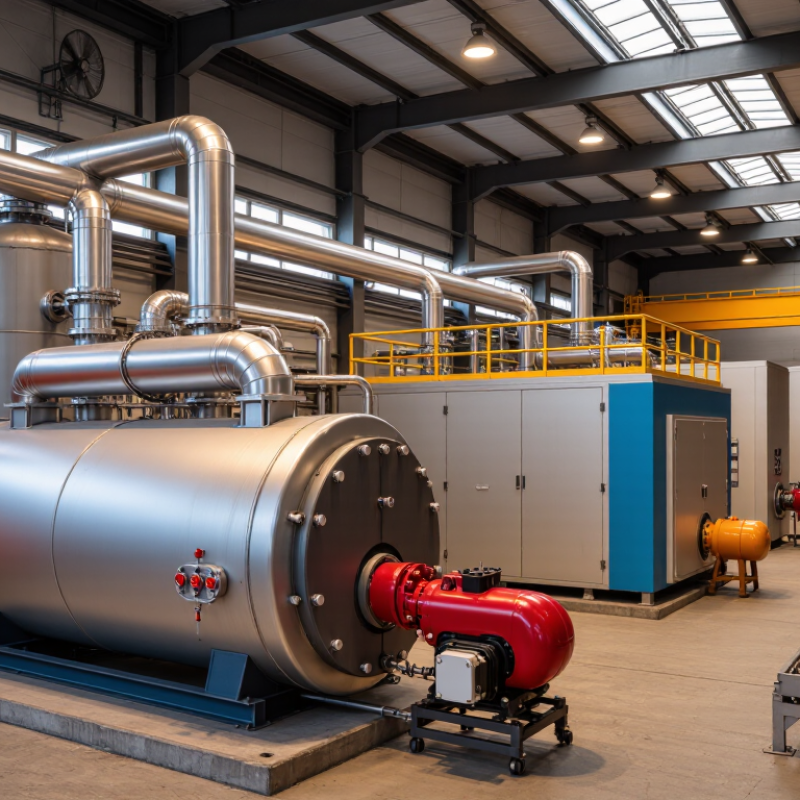
How to Choose the Right Thermal Oil Boiler?

Define the Process Heating Requirements

Choosing a thermal oil boiler starts with the process, not the boiler’s nameplate. Record the heat duty for each user, including normal and peak demand. The U.S. Department of Energy’s Improving Process Heating System Performance: A Sourcebook for Industry identifies process heating as roughly two-thirds of industrial energy use. That scale makes a weak load estimate costly. It is often wrong.

Document the required fluid supply and return temperatures, operating hours, startup frequency, and acceptable temperature variation. Note whether the process runs steadily or cycles, such as a batch vessel that heats quickly and then waits. Thermal oil systems can deliver high temperatures without steam’s corresponding pressure, but the fluid still needs suitable circulation and temperature control. Define minimum flow and allowable temperature gradients for the actual equipment.

Map the piping route and list every heater, exchanger, and control valve. Then review fluid properties at operating temperature, including viscosity and heat capacity, using the fluid supplier’s technical data. Check heat losses and future production changes. A design based only on today’s average load may struggle during cold starts or peak demand. I would verify estimates against operating logs; memory is a poor instrument.

Match Boiler Capacity to Temperature and Heat Load

Choosing a thermal oil boiler starts with the process temperature, not the largest nameplate rating available. List each user’s required supply and return temperatures, then calculate its steady heat demand and warm-up load. A reactor heating from cold, for example, may need a sharp burst of energy before settling into a lower continuous load. Add heat losses from piping and equipment, but avoid counting every machine at peak demand unless they truly run together.

The U.S. Department of Energy’s 2017 Bandwidth Study on energy use in U.S. manufacturing estimates that process heating consumes about 2.3 quadrillion Btu annually, or roughly 17% of manufacturing energy use. That scale makes load estimation worth careful attention; the figure is sector-wide, not a boiler-sizing rule.

For a practical check, use:

Q = mass flow × heat capacity × temperature rise.

With an illustrative oil heat capacity of 2.3 kJ/kg·K, transferring 1 MW across a 40°C temperature drop requires about 10.9 kg/s of oil. Confirm actual fluid properties at operating temperature.

Compare the calculated peak duty with the boiler’s usable output at the required oil temperature, then check turndown and future operating schedules. Oversizing can encourage short cycling and inefficient operation; undersizing may slow production during cold starts. The numbers will not be perfect. Verify them against measured demand, and leave a documented margin for uncertainty rather than guessing.

Compare Boiler Designs, Fuels, and System Configurations

Choosing a thermal oil boiler starts with the process, not the catalog. Coil-type heaters offer a compact flow path and fast heat transfer, while larger, multi-pass arrangements may suit higher duties or particular burner layouts. Compare rated output, turndown, fluid velocity, and the pressure drop across the heater. A small footprint is useful, but access for cleaning and coil inspection matters too.

Fuel choice changes operating costs and daily workload. Natural gas can provide steady, responsive firing where supply is reliable. Liquid fuels may offer storage flexibility, though tanks and fuel handling add maintenance. Biomass can use locally available material, but moisture, ash, and variable fuel quality complicate combustion. Check burner compatibility and the supplier’s stated efficiency under conditions close to your actual load. Real operation is rarely as tidy as a brochure suggests.

System configuration deserves equal attention. A closed loop typically includes a circulation pump, expansion tank, filtration, valves, and temperature controls. Match pump capacity to the fluid’s viscosity and the circuit’s pressure drop, especially during cold starts. Consider standby pumps or heaters if an interruption would stop production. Verify expansion-tank sizing, low-flow protection, and safe shutdown logic with a qualified engineer. Some installations look simple on paper; piping changes can make them surprisingly difficult to balance.

Evaluate Efficiency, Safety, and Environmental Requirements

A thermal oil boiler should match the process temperature and load, not just its nameplate capacity. Oversizing can mean frequent cycling; undersizing can leave a reactor jacket waiting for heat. Check the load profile, required outlet temperature, return temperature, and fluid viscosity at operating conditions. The IEA’s Energy Efficiency 2023 report estimates that industry uses about 37% of global final energy. That figure makes avoidable heat loss more than a minor operating detail. Compare tested efficiency at realistic loads, then inspect insulation, burner turndown, and flue-gas oxygen monitoring. Small details matter.

Safety checks deserve equal weight. Ask how the system handles low flow, high outlet temperature, pump failure, and a leak near hot surfaces. Verify that expansion capacity, pressure relief, alarms, and shutdown logic suit the design and heat-transfer fluid. The IPCC’s Sixth Assessment Report, Working Group III, estimates that industry produced about 24% of direct global greenhouse-gas emissions in 2019. A boiler comparison should therefore include fuel use, expected emissions, and site-specific environmental limits—not efficiency alone. Request the assumptions behind any quoted performance figure. A clean test sheet is not the whole story. I would also review fluid sampling and replacement plans; these are easy to overlook, and they affect both heat transfer and safe operation over time.

Check Installation Needs, Maintenance, and Supplier Support

How to Choose the Right Thermal Oil Boiler?

Check installation needs, maintenance, and supplier support before comparing boiler capacity or price. Confirm the required operating temperature, heat-transfer rate, circulation flow, and available space. The layout must accommodate expansion tanks, pumps, insulated piping, safe access, and exhaust routing. A neat equipment room can still hide a poor return line. Small details matter.

Maintenance depends on the fluid and operating conditions. Ask for a clear sampling plan covering viscosity, acidity, flash point, and contamination; don’t rely on a universal replacement interval. The supplier should explain commissioning, operator training, spare-part availability, and response times. IEA’s Tracking Industry 2023 estimates that industry accounts for about 37% of global energy use, making avoidable heat losses worth investigating. Still, that global figure cannot predict savings at one plant. Request documented performance assumptions and service commitments.

Tips: Ask suppliers to review a site drawing and process data before quoting. Get sample fluid-test records and a written maintenance schedule. Ask who responds when circulation pressure drops at night. Then check whether that promise is practical.

FAQS

What should I define before choosing a thermal oil boiler?

Record each user’s heat demand, supply and return temperatures, operating hours, and startup frequency. Note peak loads and acceptable temperature variation. Memory is a poor instrument.

How do I estimate the required heating capacity?

Include steady demand, cold-start heating, and losses from pipes and equipment. Use Q = mass flow × heat capacity × temperature rise. Check actual fluid properties at operating temperature.

Should every machine’s peak demand be added together?

Only if those machines operate at peak demand at the same time. A batch vessel may need a brief burst, then less heat. I would verify this against operating logs.

What problems can an oversized boiler cause?

Oversizing can lead to short cycling and inefficient operation. Undersizing may slow production during cold starts. The estimate will not be perfect.

Which boiler design details should I compare?

Compare usable output, turndown, fluid velocity, and pressure drop. Also check access for cleaning and coil inspection. A compact layout is not always easier to maintain.

How should I compare fuel options?

Consider fuel availability, operating costs, and daily maintenance. Biomass quality can vary with moisture and ash. Brochure conditions may look tidier than real operation.

What equipment does a closed-loop system typically need?

It typically includes a circulation pump, expansion tank, filtration, valves, and temperature controls. Match pump capacity to fluid viscosity and circuit pressure drop, especially during cold starts.

What safety and reliability details need review?

Check expansion-tank sizing, low-flow protection, and safe shutdown logic with a qualified engineer. Standby pumps or heaters may help protect production. Piping changes can complicate balancing.

Conclusion

Choosing the right thermal oil boiler begins with a clear understanding of the process: identify the required operating temperature, heating load, production schedule, and how consistently heat must be delivered. These details help determine the boiler’s capacity and avoid a system that is either undersized or unnecessarily large. Compare available boiler designs, fuel options, and system configurations to find an arrangement that suits the site and operating conditions.

Also consider efficiency, safety features, emissions requirements, and the practical needs of installation. Check whether the facility has adequate space, utilities, ventilation, and access for servicing. A suitable maintenance plan and dependable supplier support can help keep the system operating reliably over time. By weighing performance alongside installation and lifecycle needs, businesses can select a boiler that meets their process requirements and supports safe, efficient operation.

Charlotte

Charlotte

Charlotte is a seasoned marketing professional with a deep understanding of the company's portfolio and a passion for elevating its presence in the market. With a keen eye for detail and a commitment to excellence, she ensures that our professional blog is regularly updated with insightful articles......