
A Durable boiler & pressure vessel is not defined by thick steel alone. Its service life depends on materials, weld quality, operating conditions, water treatment, and maintenance. The details matter: a poorly protected nozzle, a neglected drain, or repeated thermal cycling can shorten useful life. Durability is designed in—and then tested in daily operation.
The International Energy Agency’s Energy Efficiency 2023 report examines industrial energy use and the importance of efficiency improvements. The U.S. Department of Energy’s Improving Steam System Performance: A Sourcebook for Industry explains how steam-system losses and operating practices affect performance. For pressure-boundary design and construction, buyers should also review the applicable ASME Boiler and Pressure Vessel Code requirements. These sources do not promise a particular service life; they help frame the questions worth asking.
Quality matters.
W. Edwards Deming, a prominent quality expert, is often quoted as saying, “Quality is everyone’s responsibility.” For boiler and vessel selection, that principle reaches beyond the manufacturer: engineers, operators, inspectors, and maintenance teams all influence reliability. Ask for traceable material records, documented inspection and testing, clear operating limits, and accessible service support. Then consider the less comfortable question: will the equipment still be maintainable when production is busy and replacement parts are needed? A sound choice balances rated capacity with real operating conditions. The tips ahead focus on that balance—without pretending any checklist can replace competent engineering review.
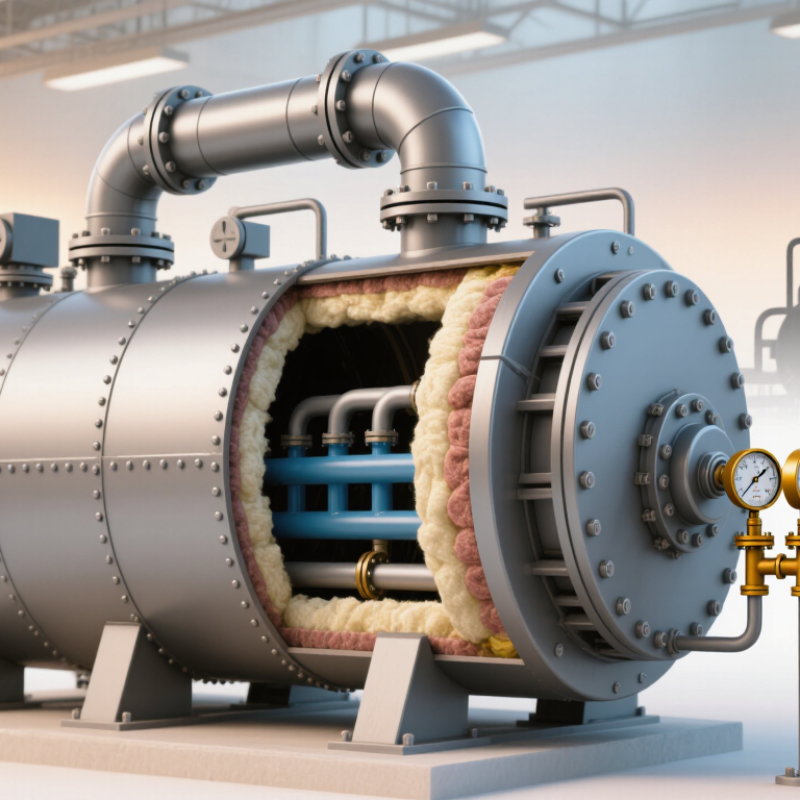
A durable boiler or pressure vessel begins with a clear picture of its working environment. Record normal and peak pressure, operating temperature, and daily heating demand. Do not size equipment from average demand alone. Morning start-ups, winter loads, and sudden process changes can create severe stress.
Fluid conditions matter just as much. Check water hardness, oxygen content, acidity, and treatment chemicals. Small impurities can accelerate corrosion inside tubes, shells, and fittings. Steam systems also need attention to condensate return and water hammer. Measure the site, not just the paperwork. Field conditions often differ from design assumptions.
Required capacity should include realistic growth, but excessive oversizing can reduce efficiency and increase cycling. Compare the expected load profile with the boiler’s usable output and turndown range. For pressure vessels, confirm volume, design pressure, temperature limits, and connection loads. A qualified engineer should verify materials, relief protection, inspection access, and applicable safety codes. One overlooked detail can matter.
Leave room for maintenance. Drain points, inspection openings, and replaceable wear components reduce future disruption. I have seen carefully calculated systems underperform because operators changed production schedules later. That weakness is easy to miss. Recheck assumptions with operators, maintenance staff, and safety personnel before approving the final specification.
7 Tips for Choosing a Durable Boiler and Pressure Vessel
Material selection should match temperature, pressure, water chemistry, and maintenance access. Tip 1: compare carbon steel, low-alloy steel, and stainless steel by allowable stress. Tip 2: verify toughness at the lowest operating temperature. Tip 3: examine weld quality, heat treatment, and plate traceability. ASME BPVC requirements provide essential design and inspection controls. However, compliance alone does not guarantee long service life.
Tip 4: measure corrosion risk before choosing an alloy. Chlorides can attack stainless steel through pitting and stress corrosion cracking. Dissolved oxygen can accelerate damage inside poorly treated feedwater systems. Tip 5: specify corrosion allowances using inspection history, not guesswork. The NACE IMPACT study estimated global corrosion costs at 2.5 trillion dollars annually, equal to about 3.4% of global GDP. That figure makes prevention financially serious.
Tip 6: request documented non-destructive testing, including ultrasonic thickness mapping and radiographic weld checks. Tip 7: design for inspection, draining, coating repair, and replacement of sacrificial components. ISO 9223 corrosion categories can help assess atmospheric exposure, but they cannot replace site testing. No alloy is perfect. In practice, designers sometimes overvalue strength and undervalue cleaning access. That choice can create hidden deposits, uneven heating, and premature tube failure. Ask for material certificates, weld procedures, pressure-test records, and a realistic inspection schedule. Reliability is built into details that are easy to overlook.
A durable boiler starts with a pressure rating that matches the real operating conditions. Check the maximum allowable working pressure at the intended temperature, not just the normal gauge reading. Confirm that the pressure-relief valve’s set pressure and capacity suit the vessel. A relief valve that fits the connection may still be incorrectly sized. Small details matter.
Review the nameplate, design calculations, material records, weld inspection results, and pressure-test documentation. The ASME Boiler and Pressure Vessel Code sets construction requirements; the National Board Inspection Code covers inspection, repair, and alteration. Requirements also vary by location, so confirm which rules apply before purchase. The U.S. Department of Energy’s Improving Steam System Performance sourcebook reports that steam systems account for about 30% of energy used in U.S. manufacturing. That figure makes operating efficiency relevant, but it does not replace pressure-safety checks.
Look closely for corrosion at low points, around nozzles, and beneath insulation. Ask for recent inspection findings and a clear record of repairs. If documents are missing, treat that as an unresolved risk, not proof of failure. Not paperwork alone. A qualified inspector can compare the vessel’s condition, rating, and safety devices with the proposed service. Even a compliant vessel may need upgrades before installation; that inconvenient possibility deserves a place in the budget.
A durable boiler starts with the people and processes behind it. Ask how the manufacturer controls material selection, welding, inspection, and pressure testing. Request traceable material records and sample inspection documents, not just a polished brochure. Paperwork matters. Check that any certifications apply to the exact equipment, facility, and work involved. A certificate alone does not prove every unit was built or inspected well.
Look for evidence of consistent quality: documented procedures, qualified inspection staff, and clear handling of nonconforming parts. Ask who reviews weld records and how test results are tied to the vessel’s serial number. If answers stay vague, pause. It is easy to overvalue a tidy presentation; even experienced buyers can miss gaps in the details. A factory visit or live video walkthrough may help you see storage conditions, work areas, and inspection steps for yourself.
Support matters after delivery, too. Confirm access to installation guidance, replacement parts, troubleshooting help, and realistic response times. Ask how technicians handle a fault during a cold morning startup, when delayed advice can affect operations. Get service commitments in writing, including what information the support team needs to diagnose a problem. No manufacturer can prevent every issue, and that is worth remembering. A reliable one explains limitations plainly and helps the owner plan inspections and maintenance without promising a trouble-free lifetime.
A durable boiler is more than a heavy shell. Its service life depends on suitable materials, sound fabrication, operating conditions, and care over time. Ask how the vessel handles expected pressure, temperature, water quality, and daily load changes. Request clear records for materials, weld inspections, pressure testing, and recommended operating limits. Keep those documents where maintenance staff can find them. Small details matter.
Tip: Plan inspection access before installation. Leave room around inspection openings, valves, and connections, rather than squeezing equipment into a tight corner. Ask what routine checks require shutdown and which parts may need replacement. A technician should be able to inspect likely wear points without removing unrelated piping. Access is easy to forget.
Maintenance affects both reliability and long-term cost. Compare service intervals, common replacement parts, labor needs, and expected downtime—not just the purchase price. Ask suppliers for a written maintenance schedule and a realistic estimate of routine expenses. Check whether local service expertise and parts are readily available. Tip: Track operating readings and repairs from day one; changes in pressure behavior, unusual noise, or repeated leaks deserve attention. One imperfect habit is relying on memory. A simple dated log is more useful, especially when staff or operating conditions change. Before choosing, have a qualified professional review the proposed unit and its fit with your system.
| Tip | What to Check | Useful Evidence or Benchmark | Why It Matters Over Time |
|---|---|---|---|
| 1. Confirm the design code and jurisdictional requirements | Identify the applicable construction code, operating regulations, registration requirements, and inspection rules for the installation location. | Request the design calculations, nameplate information, material records, and applicable code documentation. Requirements vary by jurisdiction and equipment type. | Clear compliance documentation can support safe operation, required inspections, repairs, and future transfer or resale. |
| 2. Match the vessel to actual operating conditions | Check design pressure and temperature against normal operation, startup, shutdown, and foreseeable upset conditions. Consider the fluid, cycling frequency, and connected equipment. | Compare the documented design limits with the system’s operating envelope and control settings. Have a qualified engineer review unusual loads or frequent pressure and temperature cycling. | A suitable design reduces the risk of overstress, fatigue-related damage, and expensive changes after installation. |
| 3. Evaluate materials for the water and process chemistry | Review materials for wetted parts, corrosion allowance, joining methods, and compatibility with feedwater, process fluids, treatment chemicals, and operating temperatures. | Ask for material specifications and a chemistry-control plan. Select treatment limits based on the equipment design, applicable guidance, and qualified water-treatment advice. | Appropriate material selection and chemistry control help limit corrosion, scale, deposits, and premature component replacement. |
| 4. Plan inspection access before purchase | Check that inspection openings, removable covers, clearances, lifting points, and access routes allow safe examination and maintenance. | Review layout drawings and confirm that inspection areas can be reached without major dismantling. Inspection methods and intervals should follow applicable rules and a qualified inspection plan. | Good access can reduce downtime and inspection costs while making it easier to identify deterioration early. |
| 5. Compare maintenance needs and parts availability | Review routine service tasks, recommended checks, expected wear items, repair procedures, and the availability of qualified service providers and replacement parts. | Request a maintenance schedule, operating documentation, recommended spare-parts list, and written warranty terms. Confirm who is qualified to perform required work. | Predictable maintenance and accessible parts help avoid extended outages and emergency purchasing costs. |
| 6. Compare efficiency using consistent test conditions | Consider expected load profile, fuel or energy input, standby losses, controls, and opportunities for heat recovery where appropriate. | Compare efficiency figures only when the test method, operating conditions, output basis, and included auxiliary loads are clearly stated. | Energy use over the equipment’s service life can be a substantial ownership cost, so comparable performance data is more useful than purchase price alone. |
| 7. Estimate total cost of ownership | Include purchase and installation, energy, water and treatment, inspections, scheduled maintenance, downtime, repairs, and eventual replacement or disposal. | Build a life-cycle estimate using site-specific operating hours, utility rates, service requirements, and realistic maintenance assumptions. Record assumptions for each option. | A whole-life comparison can reveal cost differences that are not apparent from the initial equipment price. |
Compare allowable stress, temperature, pressure, water chemistry, and maintenance access.
The material must resist cracking at the lowest expected operating temperature.
Review chloride levels, dissolved oxygen, water treatment, and atmospheric exposure.
Use inspection history, expected chemistry, and operating experience to define the allowance.
Request material certificates, weld procedures, pressure-test records, and documented non-destructive testing.
Poor welds may create weak points under repeated pressure and temperature changes.
Leave clear space around openings, valves, connections, and likely wear points.
Compare service intervals, replacement parts, labor, downtime, and local technical support.
Choosing a Durable boiler & pressure vessel begins with understanding the system’s operating conditions, including working pressure, temperature, fluid type, load demands, and required capacity. These factors help determine the appropriate design, size, and performance specifications. Materials should be compared carefully for strength, corrosion resistance, thermal stability, and construction quality, especially when equipment will face demanding environments or continuous operation.
Before making a decision, verify pressure ratings, protective devices, control systems, testing procedures, and applicable safety requirements. Manufacturer experience, quality management, certifications, technical documentation, and after-sales support are also important indicators of dependable equipment. Finally, consider the full ownership cost rather than the initial purchase price alone. A practical plan for inspection, preventive maintenance, spare parts, repairs, and periodic safety checks can improve efficiency, reduce unexpected downtime, and extend service life. By evaluating performance, safety, build quality, support, and long-term maintenance needs together, users can select equipment that delivers reliable operation and lasting value.
