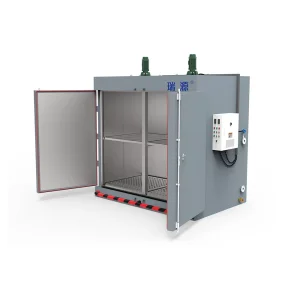
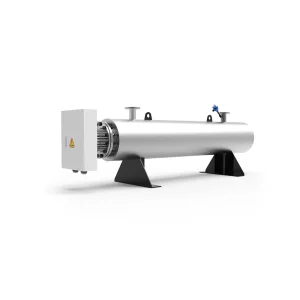
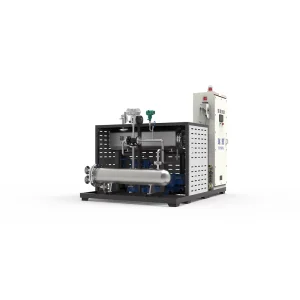
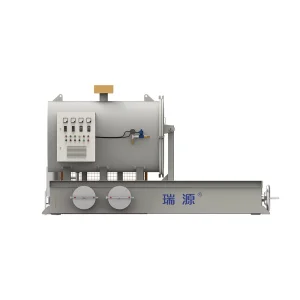
In modern heavy industries—ranging from petrochemical refining and asphalt blending to advanced polymer synthesis and food processing—heat delivery systems must operate under stringent parameters of safety, continuity, and thermo-efficiency. Historically, thermal fluid heating systems, notably pioneered by top global brands like Heatec, have been the cornerstone of high-temperature, low-pressure process heat. Unlike traditional steam systems that require high operating pressures to achieve elevated temperatures, thermal oil systems operate safely at temperatures exceeding 300°C with near-atmospheric pressure, eliminating the hazards and legal liabilities associated with high-pressure vessel operations.
Today, the global industrial sector faces a dual challenge: transitioning to net-zero carbon operations while maximizing thermal performance. High-performance electric thermal fluid heaters and specialized biphenyl vaporizers are rapidly supplanting traditional gas-fired combustion heaters. As a pioneer in heavy-duty process heating, Jiangsu Ruiyuan Heating Equipment Technology Co., Ltd. leverages over 30 years of advanced boiler and electric heating research and development. Ruiyuan stands at the vanguard of this technological evolution, supplying robust thermal fluid systems engineered to perform seamlessly in demanding industrial environments worldwide.
Industrial engineering directors continually battle the constraints of downtime, energy loss, and equipment degradation. At Jiangsu Ruiyuan, our product development strategy is laser-focused on resolving the four primary friction points encountered by operators of high-temperature processes:
Fluctuations in fluid temperature cause localized overheating, resulting in chemical cracking of the thermal oil. This leads to carbon deposits (coking) inside the heater tubes, which drastically reduces heat transfer efficiency and increases the risk of heating element failure.
We integrate solid-state relay (SSR) or thyristor power control modules coupled with PLC intelligence, regulating oil temperature dynamically within ±0.5°C to protect both the process fluid and the heating core.
Components used in synthetic polymer, plastic extrusion, and spinneret operations inevitably become fouled with polymer residues. Manual or solvent-based cleaning methods are labor-intensive, environmentally hazardous, and risk damaging critical precision components.
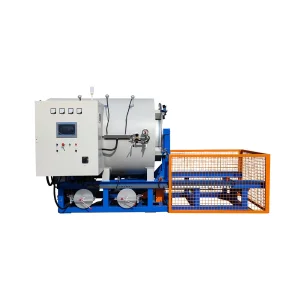
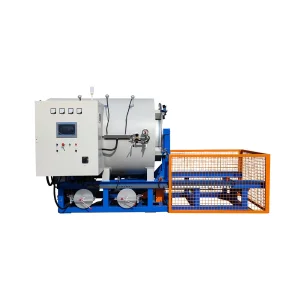
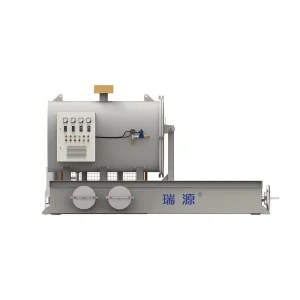
Utilizing thermal decomposition under high-vacuum conditions, our vacuum cleaning furnaces safely vaporize and calcinate polymers from spinnerets, filters, and metallic components without structural stress or harsh chemicals.
Heavy fuels, asphalt, and crude oil possess extremely high viscosities at ambient temperatures. Pumping these fluids through pipelines without uniform, constant pre-heating causes high friction losses, pump blockages, and operational halts.
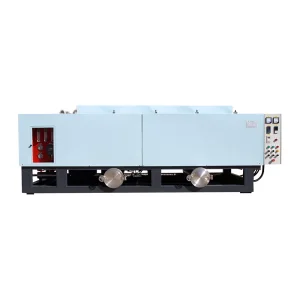
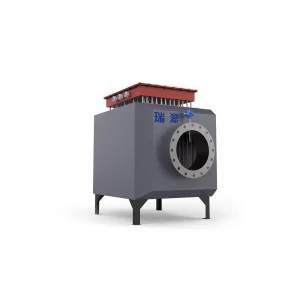
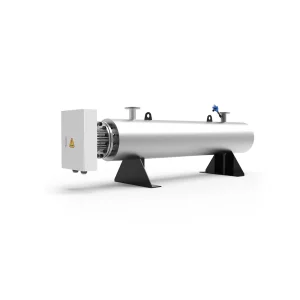
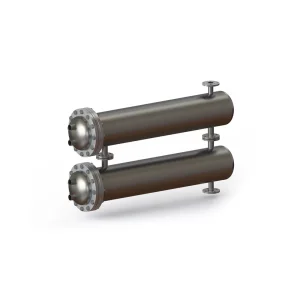
Our custom electric pipe heaters and inline heavy oil heaters are designed to deliver targeted, high-density heat directly to the moving fluid, optimizing viscosity parameters and facilitating smooth, energy-efficient flow.
Every plant layout presents unique dimensional, electrical, and thermal demands. Off-the-shelf boilers fail to fit compact skids, conform to non-standard electrical voltages, or deliver specific heat values required for exotic processes.
Ruiyuan offers custom-engineered process heating equipment, designing specialized pressure vessels, heating elements, control interfaces, and skid-mounted assemblies tailored to your specific plant configuration.
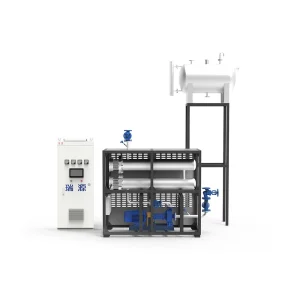
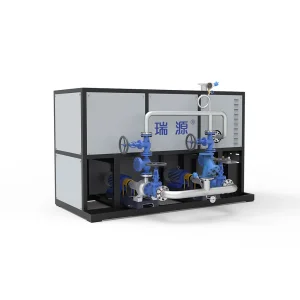
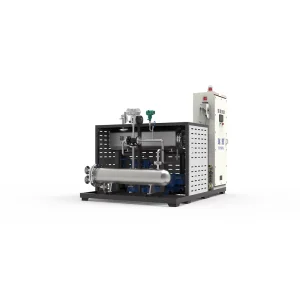
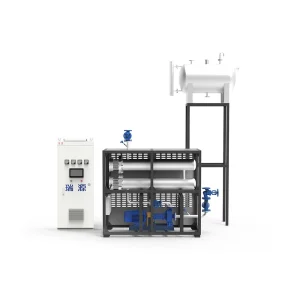
Ruiyuan's electric thermal fluid heaters utilize forced-circulation fluid dynamics. The thermal oil is pumped through a series of heating bundles containing premium-grade electric resistance elements (commonly manufactured from high-nickel alloys like Incoloy 800 or Stainless Steel 321).
Our core focus is the minimization of **film temperature**. In any thermal oil system, the temperature of the oil film directly in contact with the heating element surface is always higher than the bulk fluid temperature. If the film temperature exceeds the fluid’s thermal stability threshold, the fluid begins to degrade rapidly. To prevent this, our systems are meticulously designed using advanced fluid flow simulation to maintain high fluid velocities across the heating elements, lowering the film coefficient and ensuring long fluid life.
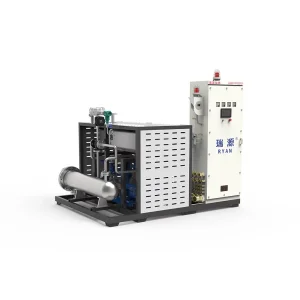
In oil, gas, and chemical processing facilities, presence of flammable gases necessitates explosion-proof certification. Ruiyuan manufactures Ex-d explosion-proof electric heater assemblies certified to international standards.
For global EPC (Engineering, Procurement, and Construction) firms and plant managers, sourcing process heating machinery from China is no longer merely a cost-saving measure—it is a strategic upgrade. Located in Jiangsu Province, the manufacturing heartland of high-end machinery in China, Ruiyuan harnesses a mature regional ecosystem of high-grade raw material suppliers, specialized metallurgists, and advanced CNC machining centers.
Unlike many Western manufacturers who outsource pressure vessel fabrication or heater element production, Ruiyuan keeps all key processes in-house. From structural welding to final control panel wiring and PLC programming, our production control ensures shorter turnaround times.
Optimized supply chains and localized component ecosystems reduce our capital expenditures. These savings are directly passed to customers, allowing Ruiyuan to offer premium thermal fluid heaters at a fraction of the cost of traditional European and North American suppliers.
We follow ASME, CE (PED), and ISO guidelines. Our welders are certified for high-pressure carbon steel and alloy steel piping, ensuring that all equipment integrated into international installations complies with local pressure equipment directives.
Our heating solutions are custom engineered to meet the unique challenges of regional industries and physical environments around the globe.
In global infrastructure construction, maintaining asphalt at pumpable temperatures (typically 150°C to 180°C) is critical. While gas-fired Heatec systems are commonly utilized on large road works, our electric skid-mounted thermal fluid heaters are ideal for remote asphalt storage terminals and urban concrete mixing plants. The skid-mounted configuration allows rapid installation and deployment without complex civil permits, keeping operations clean, quiet, and emissions-free.
Chemical reactor jackets require uniform heating without hot spots. Ruiyuan’s electric thermal oil heaters, equipped with dual-loop heating and cooling functions, permit rapid heat-up cycles followed by precise cooling cycles. In polymer extrusion factories, our vacuum cleaning furnaces handle the removal of polymer buildup from filter bundles, recovering expensive tooling and reducing downtime.
Marine terminals, power stations, and inland refineries often utilize heavy fuel oil (HFO) or residual fuel oil for operations. To keep HFO viscosity low enough for atomization in burners or transport through transmission networks, inline electric pipe heaters are installed. Ruiyuan designs high-capacity electric pipe heaters that can withstand high pressure and deliver consistent heat density even in sub-zero environments, like northern ports or high-altitude sites.
In manufacturing processes where high-temperature vapor phase heating is required, biphenyl steam generators offer an alternative to liquid-phase heating. These systems generate high-temperature biphenyl vapor at low pressure, transferring thermal energy via latent heat. Ruiyuan supplies comprehensive skid assemblies including vaporizers, condensate return systems, and safety monitoring instruments.
The industrial heating sector is undergoing the most rapid shift since the industrial revolution. Plant engineers and procurement officers must design systems not only for today's requirements, but also to withstand the regulatory and economic challenges of the next 20 to 30 years.
With stricter carbon taxes, carbon accounting, and corporate ESG mandates, companies are transitioning from fossil-fuel combustion (natural gas, diesel, and heavy oil) to electric power. By integrating electric thermal fluid heaters, plants can tap into renewable energy grids (solar, wind, hydro), reducing direct Scope 1 emissions to zero.
Predictive maintenance is replacing reactive repair cycles. Ruiyuan's integration of PLC systems with EtherNet/IP or Modbus TCP communication interfaces allows real-time data streaming of element currents, pressure levels, flow rates, and oil degradation markers, facilitating integration with SCADA networks and cloud diagnostic platforms.
Find answers to technical and operational questions regarding industrial thermal oil heaters, vacuum furnaces, and process design.
Electric thermal fluid heaters generate heat through high-efficiency electric immersion elements, yielding nearly 99% thermal efficiency with zero local emissions. They offer precise temperature control (often within ±0.5°C), require smaller physical footprints, and do not need combustion permits, stack monitoring, or complex exhaust piping. Conversely, fuel-fired heaters (natural gas or diesel, like traditional Heatec units) are well-suited for high-capacity applications (above 10 million BTU/hr) where electricity costs are high.
Thermal fluid degradation (coking) occurs when the oil’s film temperature exceeds its thermal crack point. Ruiyuan prevents this through custom hydraulic designs that maintain high turbulent flow velocities (typically 2 to 3 meters per second) across the heating elements. This keeps the oil film temperature close to the bulk oil temperature. Additionally, we integrate low-watt-density heating elements and PLC-controlled PID systems to prevent local hot spots during start-up and shutdown cycles.
A vacuum cleaning furnace is an insulated chamber designed to remove thermoplastic residues (such as polyester, nylon, PP, or PE) from spinnerets, filter bundles, and extrusion dies. By operating under high vacuum and controlled heat (typically between 350°C and 500°C), the polymers melt and flow out, while the remaining residue is thermally decomposed (pyrolyzed) into gases. This process prevents oxygen exposure, protecting critical components from oxidation and heat warping.
Yes, customization is our core capability. Over 30 years, Ruiyuan has specialized in designing and building non-standard skid assemblies. We mount the electric heater, circulation pump, expansion tank, control panels, and piping manifolds on a single steel frame. This skid is pre-wired, insulated, and pressure-tested in our factory, reducing installation time and costs at the job site.
Ruiyuan's explosion-proof heaters feature robust safety systems: explosion-proof terminal boxes certified for hazardous locations, low-flow switches to prevent heater operation under zero-flow conditions, redundant over-temperature thermocouples on the heating element sheaths, expansion tank low-level alarms, and emergency stop interlocks connected to the primary power control panels.